Vastaukset yleisimpiin kysymyksiin keraamisista pinnoitteista

Answers to the most common questions about ceramic coatings

The popularity of ceramic coatings has grown rapidly in recent years - and for good reason! They offer a safe and effective alternative to traditional coatings, which is why more and more people want to learn about them. We’ve gathered the most common questions we’ve received over the years about ceramic coatings and answered them clearly. Keep reading to discover practical tips and useful insights to help you get the most out of your ceramic-coated cookware.
What is the ceramic coating made of?


The name ‘ceramic coating’ comes from the coating’s glossy surface.

The ceramic coating is produced using sol-gel technology. Its main components are inorganic and organic salts of silicon -the second most abundant element in the Earth’s crust- such as silicon dioxide, sodium silicate, and methyltrimethoxysilane, as well as water.


Easy to clean


The ceramic coating is easy to clean, and we recommend hand washing with dish soap and a brush or sponge after each use. Remember to clean both the inside and outside of your pan. This way, your pan will be completely clean and ready for your next cooking session!


What are PFAS chemicals?


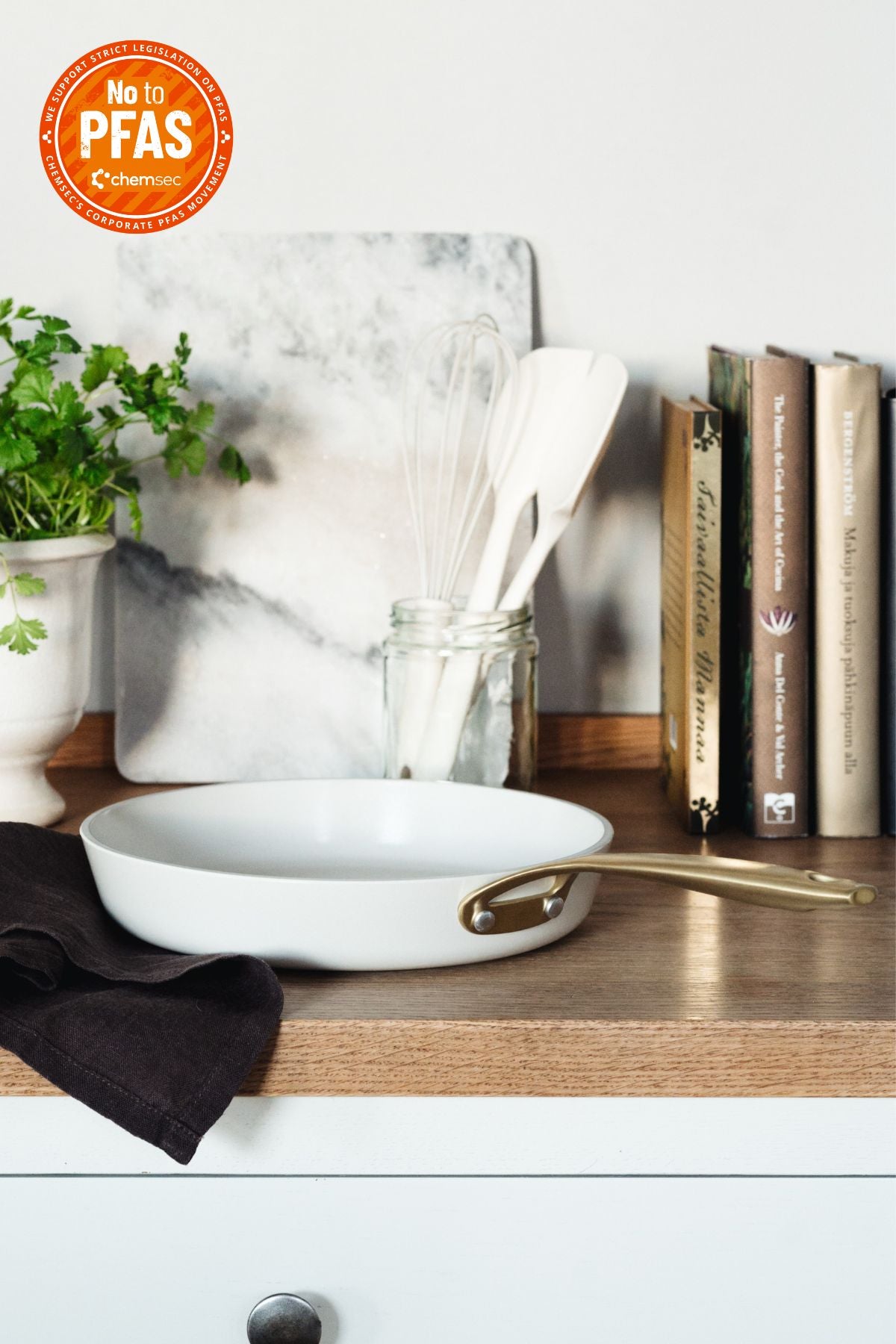
The PFAS family includes more than 5,000 harmful chemicals that have been used in consumer products since the 1950s. PFAS chemicals, also known as ‘forever chemicals,’ are found in many types of products, including cosmetics, food packaging, outdoor gear, and non-stick cookware coatings. Read more about PFAS chemicals and their risks here.

Do I need to use oil or butter?


Yes! Although you can cook with less fat on a ceramic-coated pan, using a small amount of oil or butter helps protect the coating and improves performance. It also extends the lifespan of your cookware, as it helps you see when the pan is hot.

Always add cooking fat to a cold pan before turning on the stove!


What kind of oil should I use?


Any oil or butter will work, but we recommend clarified butter, ghee, olive oil, or coconut oil. Fats that can withstand high temperatures help prevent smoking, burning, and residue buildup on your pans.


What heat setting should I use?


When using coated cookware, always cook on low to medium heat. For example, on an induction stove with a 0–9 scale, use settings 4–6. Higher temperatures should be reserved for boiling water only.

Overheating can damage the non-stick properties of the coating.

Cooking on medium heat ensures your food cooks evenly and develops a beautiful surface while preventing sticking, staining, and premature wear.


Can I put my pans in the dishwasher?


Hand wash only! Dishwashers can be harsh on the non-stick surface. For best results, clean your pans with warm, soapy water and a soft sponge. It’s the best way to keep them looking and performing like new.


What kind of small utensils are suitable for a frying pan?


Use wooden, plastic, silicone, or nylon utensils with coated cookware. Make sure that your spatula or ladle does not have sharp edges that could scratch the coating.


Is this pan suitable for my stove?


Yes! All our cookware works on every type of stove! Whether you have an induction, ceramic, or cast-iron stove, you can use our pans. Our pans are also oven-safe.